Graceful Curves and Colorful Glass: Discover Art Nouveau Gems in Kecskemét
Graceful Curves and Colorful Glass: Discover Art Nouveau Gems in Kecskemét
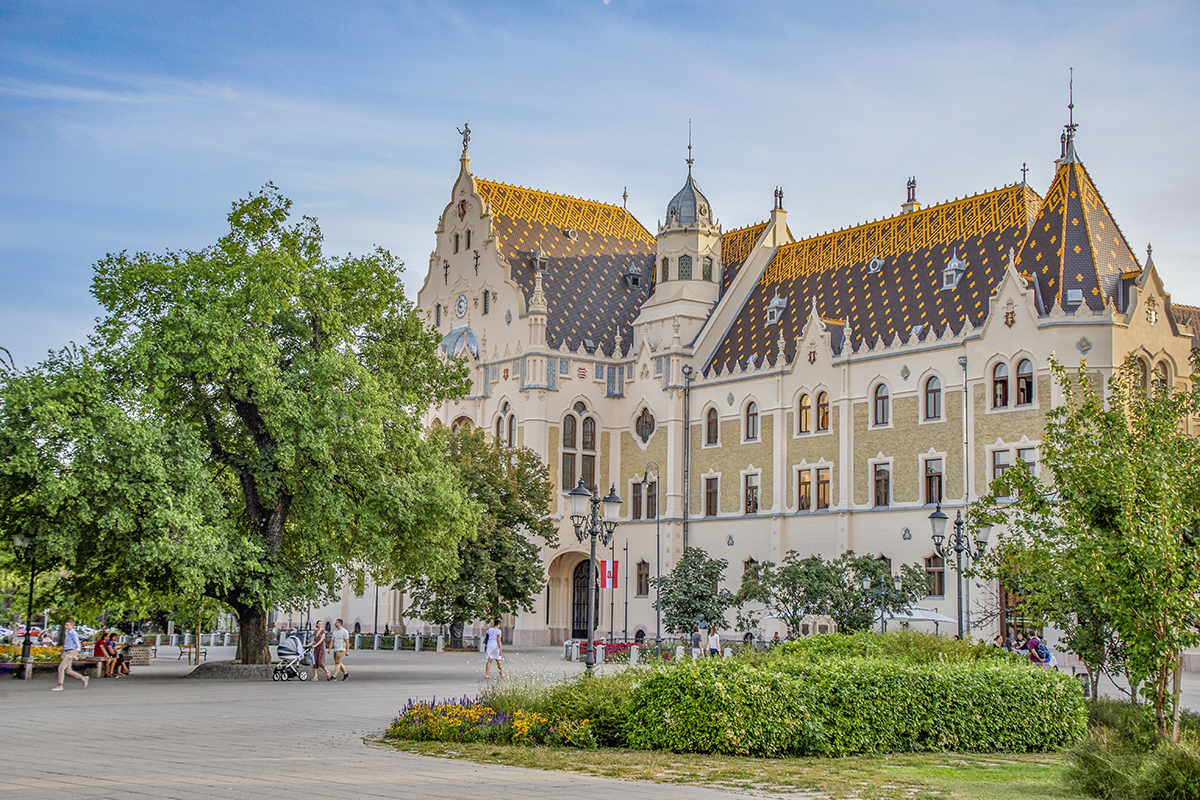
Kecskemét stands out in central Hungary for its stunning Art Nouveau buildings and creative spirit. The Cifra Palace grabs attention with its bright tiles and detailed decorations, making it a must-see landmark. Nearby, the Synagogue's graceful lines and colorful glass tell the story of a city shaped by artists and architects.
The beauty of Kecskemét does not end with its buildings. Music and art have a deep history here, from famous composers to the city's lively festivals. This blend of architecture and culture gives Kecskemét its own unique style, inviting visitors to look closer and explore more.
Key Takeaways
- Kecskemét is home to unique Art Nouveau architecture.
- The city celebrates both artistic and musical heritage.
- Its landmarks offer a special window into Hungarian culture.
Majestic Art Nouveau Landmarks and Architectural Heritage
Kecskemét is home to iconic Art Nouveau structures, historic religious spaces, and colorful civic buildings. These sites showcase a mix of Hungarian Secession, Moorish Revival, Baroque, and Neoclassical designs.
Cifra Palace: Jewel of the Hungarian Secession
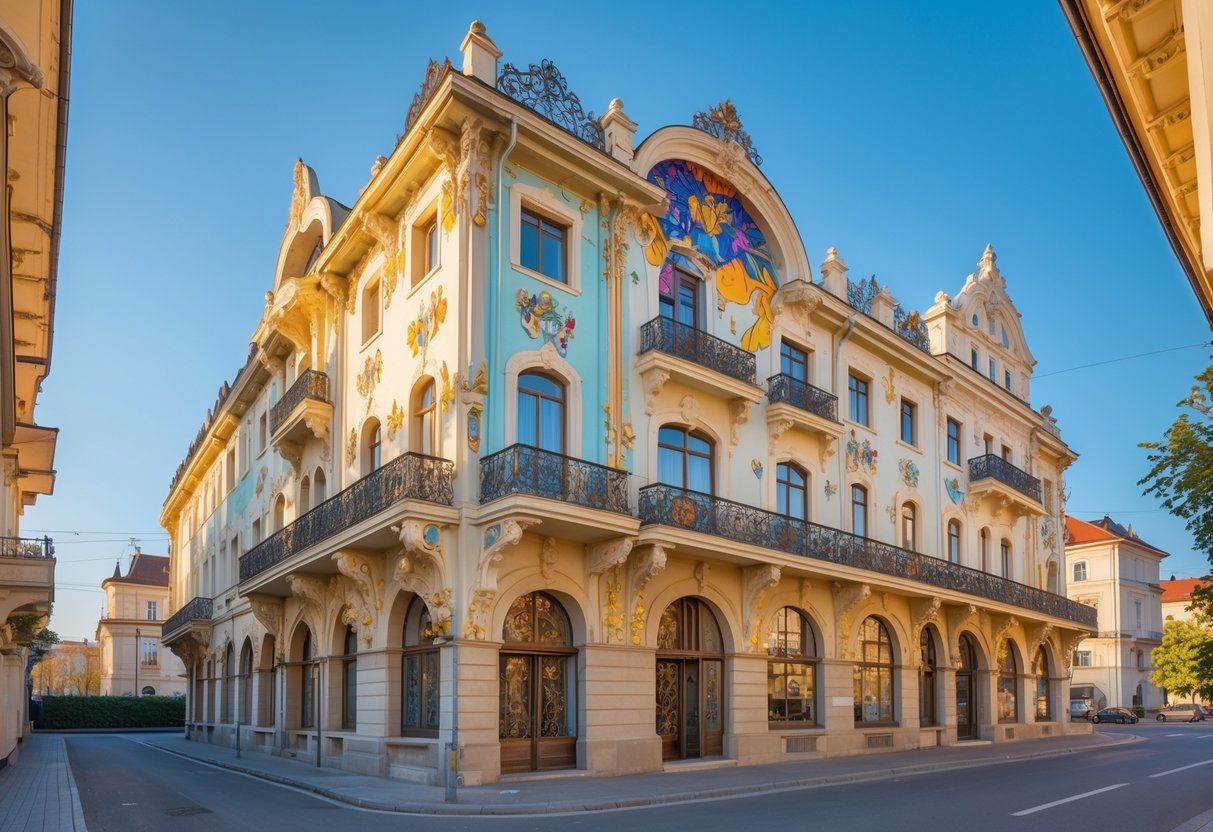
The Cifra Palace, or Cifrapalota, stands out with its vibrant Zsolnay ceramic tiles and swirling decorative motifs. Built in 1902, the building's facade glows with blues, greens, and yellows, making it a local landmark.
Details like wrought-iron balconies, floral patterns, and folk-art themes are clear signs of Hungarian Secession style—the nation's form of Art Nouveau. Inside, large stained-glass windows and painted ceilings add to the colorful personality.
Today, the Cifra Palace serves as a museum highlighting local art and culture. It attracts visitors who wish to learn about the area's heritage and view unique works by regional artists.
Key Features:
- Zsolnay ceramic tiles
- Folk-inspired patterns
- Museum of local art
Kecskemét City Hall and the Magic of Majolica Tiles
The Kecskemét City Hall is an impressive building finished in 1897. Designed by Ödön Lechner and Gyula Pártos, it is one of Hungary's most recognized Art Nouveau works.
The facade includes majolica tiles and a mix of red brick, blue, and cream accents that make the building stand out. On close inspection, visitors see stylized Hungarian motifs, such as tulips and pomegranates, adding local identity.
Inside, painted walls, ornate ironwork, and murals celebrate history and city pride. Major civic events and ceremonies are held here, keeping the building at the center of city life.
Highlights:
- Ornate majolica tile work
- Interior murals and frescoes
- Central role in community events
The Synagogue: Moorish Revival and Modern Purpose
Kecskemét's synagogue was built in 1871 in a Moorish Revival style, with onion domes and decorative brickwork. Horseshoe arches frame the windows and entry, while intricate plasterwork and stained glass fill the space with light.
Once a major gathering place for the local Jewish community, the synagogue's role has changed over time. After World War II, it was used for different functions and later restored for concerts and cultural events.
Though not an Art Nouveau building, the synagogue adds to the city's architectural mix and is a symbol of Kecskemét's diverse past.
Notable Elements:
- Moorish-style domes
- Horseshoe arch windows
- Cultural event venue today
Nagytemplom and the Legacy of Sacred Spaces
The Nagytemplom, or Great Church, is the largest church in Kecskemét. Its design blends Baroque and Neoclassical elements, standing apart from the city's Art Nouveau buildings.
Tall columns, detailed stuccoes, and a bell tower define the Nagytemplom. The high ceiling and large altar create an airy, grand atmosphere for worship.
Not far from the Nagytemplom, the Reformed Church features distinctive brickwork and a simple, sturdy structure, showing a different side of the city's religious heritage. Both churches remain active places of faith and community.
Features:
- Baroque and Neoclassical styles
- Tall bell tower
- Active place of worship
Vibrant Artistic and Musical Life in Kecskemét
Kecskemét has a rich tradition of theater, festivals, and horticultural beauty that highlight the town's cultural identity. Visitors can experience performances, local celebrations, and green spaces that reflect both history and the creative spirit of the area.
Theater and Performances at Katona József Theatre
The Katona József Theatre stands at the heart of Kecskemét's performing arts scene. Named after the famous Hungarian playwright, this theater has operated since the late 19th century.
The building is a local landmark known for its Art Nouveau design. Its stained glass, decorative motifs, and elegant facade attract architecture lovers as well as theatergoers.
Plays, operas, and concerts are held throughout the year. The theater's programs often showcase Hungarian classics and highlight local talent. School groups and families regularly make visits, making it a central spot for community life.
Guest performances and festivals also take place here, bringing artists from across Hungary. Katona József Theatre remains a symbol of Kecskemét's dedication to the arts.
Kecskemét's Festivals: Celebrating Culture and Heritage
Kecskemét hosts several festivals each year that focus on music, art, and local history. The Kecskemét Spring Festival is a highlight, featuring a variety of events from classical concerts to jazz nights.
Folk traditions are kept alive with dance shows and craft exhibitions. Local artisans offer workshops and display traditional works at street fairs.
During festival times, the whole town gets involved. Music can be heard in public squares, and food stalls offer regional dishes. The festivals help new generations learn about Kecskemét's culture, and they attract guests from nearby regions.
Botanical Garden, Parks, and Natural Beauty
Green spaces add to the town's charm. The Kecskemét Botanical Garden, located close to the city center, showcases local and exotic plant species. Visitors can stroll through well-marked paths and see seasonal flowers in bloom.
Public parks, such as Szabadság Square, offer relaxing spots shaded by old trees. These parks are popular for walks, picnics, or painting outdoors.
Kecskemét Zoo is another family-friendly spot. It features native Hungarian animals, educational programs, and areas for children to learn about nature.
The careful design of gardens, parks, and the zoo make these spaces accessible and enjoyable throughout the year.
From Agriculture to Trade: Foundations of Local Creativity
Kecskemét's creative life has deep roots in its history of agriculture and trade. The region is famous for its orchards, especially apricots, which are made into jam and the well-known pálinka spirit.
Markets have been held in Kecskemét since the Middle Ages. Farmers and merchants brought goods from the area, helping shape local customs and cuisine.
This exchange fostered a culture where crafts and music flourished alongside business. Many of the town's artists and musicians today come from families involved in farming or trade.
Local products continue to inspire new creative work and provide a link to Kecskemét's heritage.