Ruins and Romance: Dörgicse's Quiet Medieval Soul
Ruins and Romance: Dörgicse's Quiet Medieval Soul
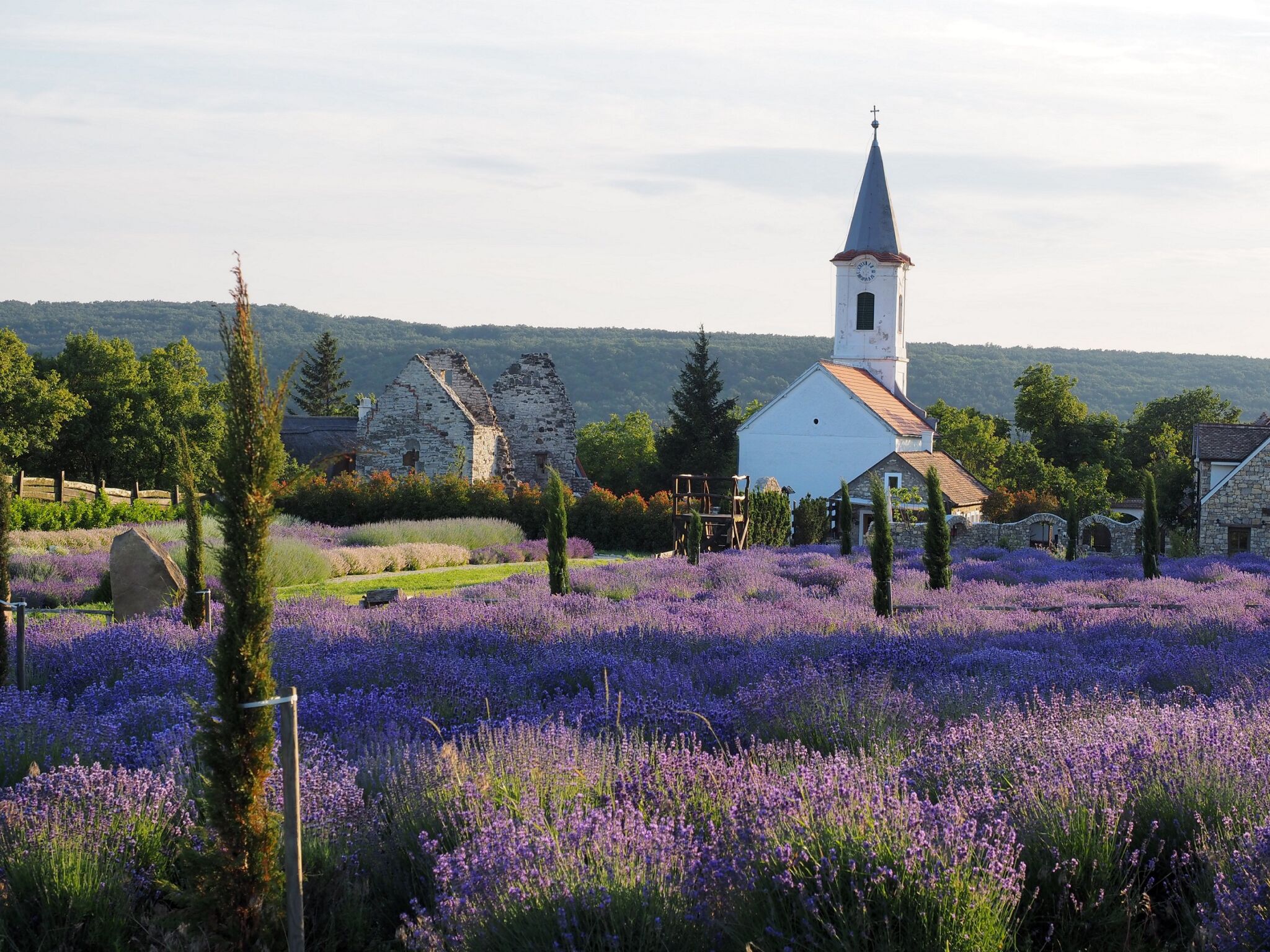
Not far from the busy streets of Budapest, there are quiet villages that most travelers never see. Dörgicse is a peaceful spot in the Balaton Highlands, known for its medieval church ruins and calm countryside setting. Surrounded by rolling hills, vineyards, and the scenic beauty of Veszprém county, this village offers a closer look at Hungary's rural past.
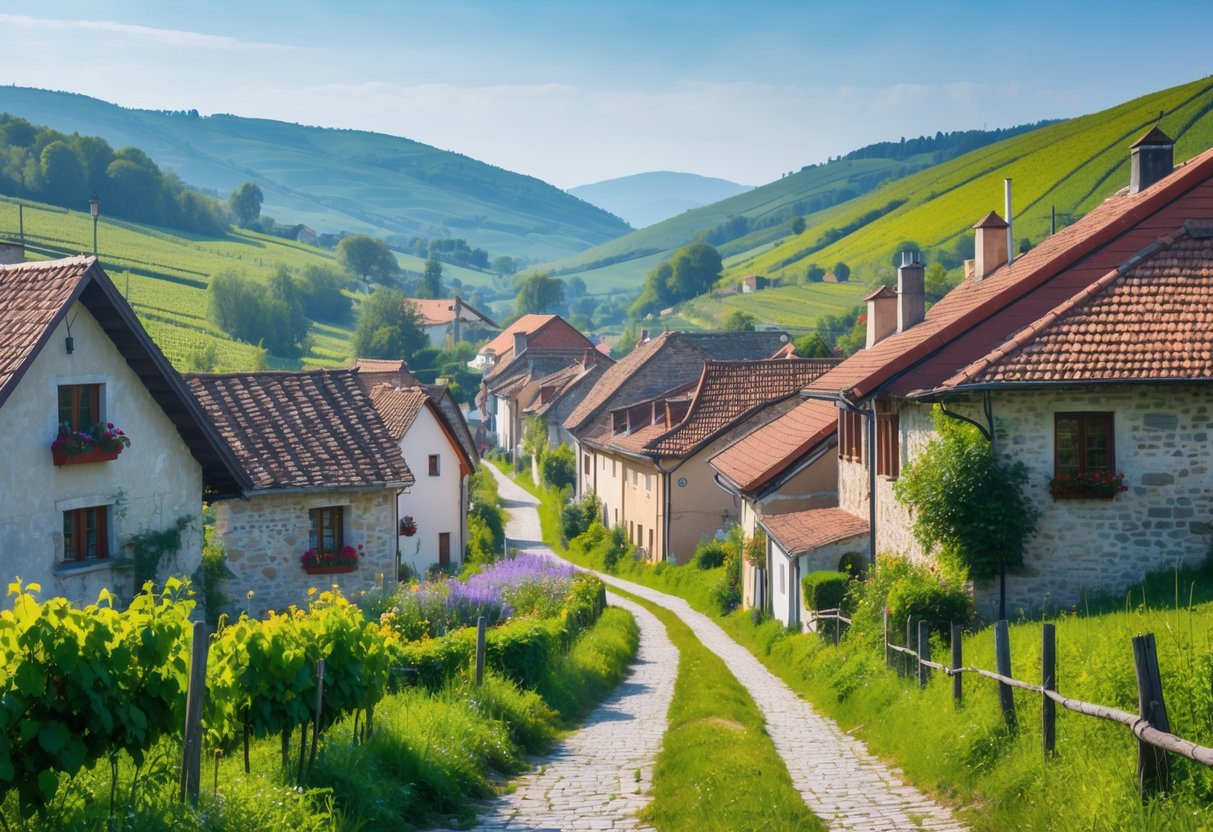
The remains of old stone churches show how people lived centuries ago, with unique details that reflect the area's long history. Dörgicse's small houses blend in with the natural landscape, and many visitors find the local charm different from the well-known tourist sites near Lake Balaton.
Key Takeaways
- Dörgicse offers a quiet escape with medieval church ruins in Hungary's countryside.
- The village is known for its unique mix of nature, history, and old architecture.
- Visitors can expect a peaceful setting away from busy tourist spots.
Historical and Cultural Heritage of Dörgicse
Dörgicse is a village layered with history, shaped by centuries of change. Its distinct architectural remains and lasting traditions offer a window into Hungary's rural past.
Origins and Historical Context
Dörgicse sits in Veszprém county, deep in the Balaton Highlands. Records place the village as early as the 11th or 12th century. Originally, the settlement was divided into three: Alsódörgicse (Lower Dörgicse), Felsődörgicse (Upper Dörgicse), and Kisdörgicse (Little Dörgicse).
The area grew with agriculture, especially grape growing, thanks to its mild climate. Early life centered on farming, crafts, and trade with nearby villages. As time passed, the village saw changing rulers and shifting borders, but its rural lifestyle stayed strong.
Through the Middle Ages, Dörgicse was influenced by church and nobility. Its cultural roots remain visible today in both the landscape and the traditions held by residents.
Medieval Church Ruins and Religious Landmarks
Dörgicse is best known for its church ruins, called templomrom in Hungarian. These are among the best-kept medieval church ruins in the Balaton-felvidék (Balaton Highlands) region. Notably, three different ruins survive—one each in Alsódörgicse, Felsődörgicse, and Kisdörgicse.
- Alsódörgicse: Features the remains of a 13th-century Romanesque church with thick stone walls.
- Felsődörgicse: Home to the ruins of a later Gothic-style church.
- Kisdörgicse: The smallest, with simple stonework, but a strong sense of age.
Villagers still gather at the standing Evangélikus templom (Lutheran church), which is a classic local műemlék (monument). These religious sites add atmosphere and are a draw for travelers interested in architecture and history.
Impact of Historical Events on Village Identity
Dörgicse's identity has been shaped by historical events, especially the Turkish wars (török háborúk) of the 16th and 17th centuries. During this unstable period, much of the area was damaged or left empty. Many villagers left, churches were partly destroyed, and growth stopped for many years.
List:
- Turkish occupation brought hardship and population loss.
- Medieval church buildings were damaged, some never rebuilt.
- After the wars, the village rebuilt slowly, keeping close ties to its traditions.
These events forged a sense of resilience and continuity in Dörgicse. The scars of conflict are visible in the worn stones of the church ruins, while daily life still echoes past hardships and triumphs. The survival of ancient structures stands as proof of Dörgicse's lasting spirit.
Local Charm, Architecture, and Natural Splendor
Dörgicse is shaped by its medieval landmarks, its rich natural surroundings, and old traditions that continue even today. Its quiet roads, vineyard hills, and the ruins of ancient churches offer a sense of timelessness that is rare in Hungary's countryside.
Unique Architectural Elements and Preservation
Dörgicse is known for its medieval church ruins, including three separate sites from different centuries. The best preserved is the Romanesque church ruin in Kisdörgicse, built in the 13th century using local limestone. Its round apse, thick walls, and carved stones hint at the village's long history.
Villagers use limestone for many old buildings, giving Dörgicse a special look that fits its surroundings. Charming homes often have small windows, wooden shutters, and whitewashed walls. Some have small stone barns attached, reflecting traditional farming life.
There is also a stone bridge called Kőhíd near the village, showing local skills in stonework. Preservation groups work to protect these sites, so visitors can see both original and restored details.
Picturesque Landscapes and Balaton Highlands
Dörgicse stands on the north side of the Balaton-felvidék (Balaton Highlands), providing wide views of hills, fields, and forests. The landscape is shaped by gentle slopes, valleys like Kűvölgy, and small streams. Nearby Gernye-hegy rises gently above the rooftops.
Fields of sunflowers and wildflowers bloom in the summer. Small oak groves and vineyards stretch behind the houses. In the spring and fall, the air is filled with the sound of birds, and the hills turn green or golden.
Many hiking trails start in Dörgicse and lead towards Balatonakali or across the hills to nearby villages. Walkers pass orchards and stony paths, catching sight of Lake Balaton in the distance on clear days.
Wine Culture and Rural Traditions
Vineyards cover many hills around Dörgicse, as the Balaton-felvidék is famous for its wine production. Grapes like Olaszrizling and Furmint grow well in the limestone soils, helping local winemakers create fresh, mineral-rich wines.
Many small wine cellars (called "pince" in Hungarian) can be found along the slopes. During harvest, families pick grapes by hand. Winemaking days often become small festivals, with food, folk songs, and older neighbors sharing stories.
Dörgicse's wine, or bor, is often sold at roadside stands or in nearby towns. Wine tasting is simple and friendly, with a focus on tradition and quality more than commercial style.
Dörgicse's Relationship With the Lake Balaton Region
Dörgicse sits about six kilometers north of Lake Balaton, Europe's largest freshwater lake and a key part of local culture. Though the village is quiet, it is closely tied to the lake's history and the regional market at Balatonakali.
Farmers from Dörgicse often bring their produce and wine to sell in lakeside towns. Fishermen travel down to Balaton for summer work, while visitors from the lake come north to walk in the hills or explore medieval ruins.
The relationship is visible each summer, when village festivals and Balaton days bring together people from both sides of the hills. This bond connects Dörgicse to the region and lets it keep its unique charm while welcoming guests from around Hungary.