Time Slows in Stone and Vine: Adventures Through the Káli Basin

Time Slows in Stone and Vine: Adventures Through the Káli Basin
Tucked away in the northwestern corner of Lake Balaton, the Káli Basin offers an escape into rolling hills, small lakes, and peaceful countryside. This region is known for its quiet villages, ancient ruins, and scenic bike routes that invite travelers to slow down and explore at their own pace. Nature thrives here, with fields of wildflowers and stone churches dotting the landscape.
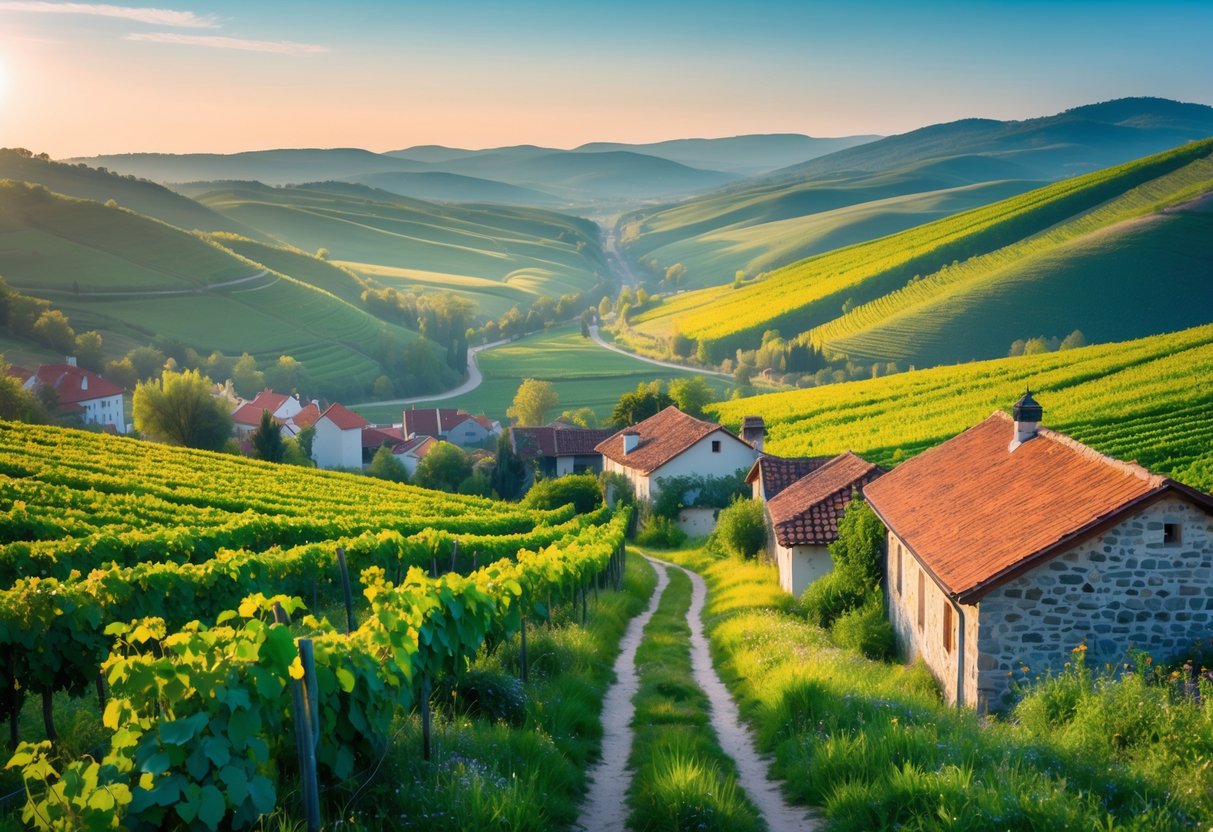
The rhythm of life in the Káli Basin moves gently. Locals gather in village squares, home gardens overflow with summer produce, and narrow roads wind through vineyards and orchards. For those looking for fresh air and adventure, marked trails connect sleepy hamlets to historical sites, often with stunning views across the basin.
Key Takeaways
- The Káli Basin is famous for its peaceful rural scenery and authentic village life.
- Visitors can explore the area through biking and hiking trails lined with ancient ruins.
- Nature lovers will find beautiful landscapes and a calm atmosphere in this hidden Hungarian region.
The Heart of the Káli Basin: Landscapes and Village Life
Stone farmhouses, ancient ruins, and open fields shape everyday life in the Káli Basin. The region offers a mix of old traditions, special foods, and peaceful sights that invite exploration at a slow pace.
Charming Villages and Rural Traditions
Villages like Köveskál, Salföld, Szentbékkálla, Dörgicse, and Balatonhenye are known for their whitewashed farmhouses and quiet lanes. Each place has a central church, and many homes display carved wooden gates and small flower gardens.
Local people take pride in their customs. Farmers sell honey, cheese, fruit, and homemade preserves at weekly village markets. Craft fairs showcase pottery, handwoven baskets, and embroidered linens. In summer, neighbors gather for open-air festivals where music and folk dances fill the central squares.
A stroll through any village might lead to an old well, crumbling mill, or a centuries-old stone barn. Old barns and cellars, some built from the region's volcanic rock, remind visitors of the countryside's deep roots.
Natural Wonders and Geological Heritage
Káli Basin's hills and valleys reveal fascinating geology. The Hegyestű Geosite stands out for its volcanic hill, which rises steeply over the plain. Layers of basalt columns are clearly visible, and visitors can walk along marked trails and learn about the area's volcanic past.
The land contains more than just volcanoes. Sandstone conglomerates, dolomite outcrops, and permian red sandstone add variety. The surrounding basalt mountains shape the views, with farmhouses dotting the lower slopes.
On the valley floor, Kornyi Lake attracts storks and herons. Wildflowers bloom in spring and summer, covering meadows with color. Dry stone walls, built over many decades, snake along fields and roads, marking ancient property lines.
Peaceful Countryside Atmosphere
Life in the Káli Basin moves quietly. There are few busy roads or large towns, which makes bike rides from one village to the next especially enjoyable. Most routes are flat or gently rolling, making them inviting even for new cyclists and families.
Shaded lanes lined with walnut trees, quiet streams, and fields peppered with haystacks give the area a timeless feel. Birds nest in orchard trees and dragonflies hover over small ponds. In the evenings, farmhouses glow with warm lights as crickets and frogs fill the air with gentle sounds.
Many visitors spend hours simply walking the footpaths, enjoying the silence or stopping by a wooden bench to take in views over vineyards and distant hills.
Taste of Tradition: Local Cuisine and Mineral Water
Traditional Hungarian food is important in the Káli Basin. Small inns and farmhouse kitchens serve dishes made from local produce. Common options include goulash, roasted meats, homemade bread, and strudel with fresh fruit.
The region's mineral water is famous for its clear taste and high mineral content. Natural springs can be found in several villages, and many locals fill glass bottles for home use. The water's purity comes from the area's ancient volcanic and limestone layers.
Markets in villages sell smoked sausages, cheeses, honey, and plum jam. Seasonal fruits, like cherries and apricots, are used in both meals and local desserts. Every meal is a chance to taste the land and its history.
Active Exploration: Biking, Hiking, and Ancient Ruins
The Káli Basin is rich with quiet country roads, scenic trails, and vestiges of the past. Visitors can discover the landscape at their own pace by bike or on foot, stopping to explore historic sites and small villages dotted among vineyards.
Bike Routes Across Vineyards and Countryside
Cyclists find many marked bike routes in the Káli Basin. One popular loop starts in Zánka and travels past Köveskál, Szentbékkálla, and Mindszentkálla. Riders pass rows of grapevines, whitewashed chapels, and family wineries.
Many paths connect to the Balaton Uplands National Park. The route between Badacsony and Tapolca follows the edge of the basalt hills, offering views of Lake Balaton to the south. Bikers can stop at local wineries to taste crisp white wines or visit farm stands with fresh apricots and plums.
Hiking Trails and Geological Marvels
Well-marked trails cross the Káli Basin, taking hikers past basalt outcrops and lush meadows. The Hegyestű Geological Visitor Site stands out with its steep basalt columns and panoramic viewing platform overlooking the entire region.
Trails from Szentbékkálla wind through unique natural attractions like the Kőtenger ("Sea of Stones"), where strange rock formations provide shaded spots to rest. Walkers also reach quiet forests bordering the Tihany Peninsula or the rolling hills above Csopak.
Discovering Ancient and Medieval Sites
Ruins and medieval monuments are scattered throughout the Káli Basin. Szigliget Castle stands on a volcanic hill overlooking Lake Balaton, offering sweeping views and a look into Hungary's medieval past. Restoration work allows visitors to climb the towers and explore the old courtyards.
In Kékkút, ancient Roman baths hint at longstanding spa tradition. Many churches in the small towns, like Mindszentkálla and Köveskál, feature medieval frescoes and simple stone carvings.
A short drive leads to the Festetics Palace in Keszthely, a baroque estate with well-kept gardens and a library housing rare books. These historical sites connect the visitor to the varied eras that shaped the landscape.
Nearby Lakes, Lavender Fields, and Summer Escapes
The northern shore of Lake Balaton is just a short ride away, with sandy beaches and clear swimming waters near Balatonfüred, Csopak, and Zánka. Tihany Peninsula is famous for its sprawling lavender fields, which bloom in June and July.
Walking paths circle the water at Tapolca's lake-cave, while in summer, villages celebrate grape and flower harvests with fairs. Hévíz, a thermal lake close to Keszthely, offers warm mineral-rich waters for swimming and relaxation.